Text to video
Describe a scene in up to 15,000 characters. Choose 4 to 30 seconds, an aspect ratio and whether sound is on.
- Prompt required
- 1080p output
- Sound optional
Sand.ai flagship video model, now available
Turn a prompt, a photo or a set of references into 1080p video with synchronized sound. Magi-2 creates 4 to 30 second clips in one pass.
These clips were rendered by Magi-2 through the Higgsfield API with sound on. Each one is a single text prompt, with no editing.
Magi-2 turns a short description into a finished clip. The flow is the same for text, frames and references.
Pick text to video, first and last frame, or reference to video. Magi-2 is selected by default.
Write one or two actions, one camera move and any spoken line in quotes. Prompts can run up to 15,000 characters.
Choose 4 to 30 seconds and one of six aspect ratios, then turn sound on or off. The credit price appears before you press Create.
Magi-2 renders 1080p video with its soundtrack. Preview the clip, download it and try a new variation.
Magi-2 is the flagship video generation model from Sand.ai, announced on November 24, 2026. It has 480 billion parameters in total and activates about 28 billion of them for each token, which makes Magi-2 one of the largest sparse models built for video. From a text prompt, a still image or a set of references, Magi-2 produces 4 to 30 seconds of 1080p video at 25 frames per second, with the soundtrack generated in the same pass.
Magi-2 is available through Higgsfield, on its web app and through its API. MagiVideo AI connects to the Higgsfield API, so you can generate with Magi-2 here and compare the results with Seedance, Kling, Veo, Wan and MiniMax in the same generator.

Magi-2 scales that work up. It was pre-trained on roughly 4 trillion tokens, about three times the data behind the Preview model, and a post-training stage improves detail, sound and reference fidelity.
| Developer | Sand.ai |
|---|---|
| Announced | November 24, 2026 |
| Parameters | 480B total, about 28B active (5.8% sparsity) |
| Architecture | Single-stream Transformer with Multi-Head Latent MoE |
| Output | 4 to 30 seconds, 1080p, 25 fps |
| Sound | Native: lip-synced dialogue, foley, ambience, music |
| Aspect ratios | 21:9, 16:9, 4:3, 1:1, 3:4, 9:16 |
| References | Up to 20: 10 images, 5 videos, 5 audio clips |
| Modes | Text to video, first and last frame, reference to video |
| Weights | Open weights announced, not yet released |
Magi-2 treats a clip and its sound as one sequence. Text, image, video and audio tokens enter a single-stream Transformer that uses self-attention only, with no separate branch or cross-attention module for each medium. The design builds on the single-stream approach from Sand.ai's earlier daVinci-MagiHuman work, and it keeps picture and sound aligned from the first layer to the last.
Most of the capacity sits in Multi-Head Latent Mixture-of-Experts layers. Each token is split across heads, and every head chooses from its own pool of experts. Only a small share of the 480B weights runs for any token, which keeps Magi-2 practical to run at this scale. In Sand.ai's ablations, an eight-head version reached a lower validation loss than a standard mixture-of-experts layer.
Training a model this size needed new systems work. Sand.ai describes Head Parallel for sharding, MagiFSDP for memory, MagiMoE kernels for routing and expert compute, and the MagiMuon optimizer. Together they gave Magi-2 a training speedup of about 22% over a LatentMoE baseline.
On data, the team avoids what it calls the data filtering trap. Over-cleaned datasets remove the multi-person scenes, rapid cuts, on-screen text and dense soundscapes that people actually want to make, so Magi-2 keeps that complexity in its training data. Roughly one billion samples were annotated in three weeks.
After pre-training, reinforcement learning rewards visual and acoustic richness in Magi-2, and a latent spatiotemporal upscaler delivers the final 1080p frames. The upscaler re-injects the reference images, which helps small faces keep their identity and on-screen text stay legible.
Sand.ai documented the building blocks in detail for Magi-2 Preview, and the flagship Magi-2 builds on the same design at a larger scale.
| Layers | 40 in total: 36 sparse layers in the middle, 4 dense layers at the boundaries |
|---|---|
| Hidden width | 3,072 |
| Attention heads | 12 heads of 256 dimensions |
| Experts | 256 per head, so 3,072 narrow experts in each sparse layer |
| Routing | Top-6 experts per head, routing computed in FP32 |
| Expert layer | SwiGLU feed-forward, 256 to 1,280 to 256 units |
| Precision | BF16 experts |
| Load balancing | Auxiliary-loss-free expert bias |
Magi-2 is built for finished scenes rather than short loops. These are the capabilities that matter most when you create with it.
Magi-2 does not add sound afterward. Lip-synced dialogue, foley, ambience and music are generated together with the picture, so a door slam lands on the right frame and a character's mouth matches the line. In the generator, the Sound switch turns audio on or off.
Dense soundscapes remain the hardest case, so keep each scene to a few clear sounds and put spoken lines in quotation marks.
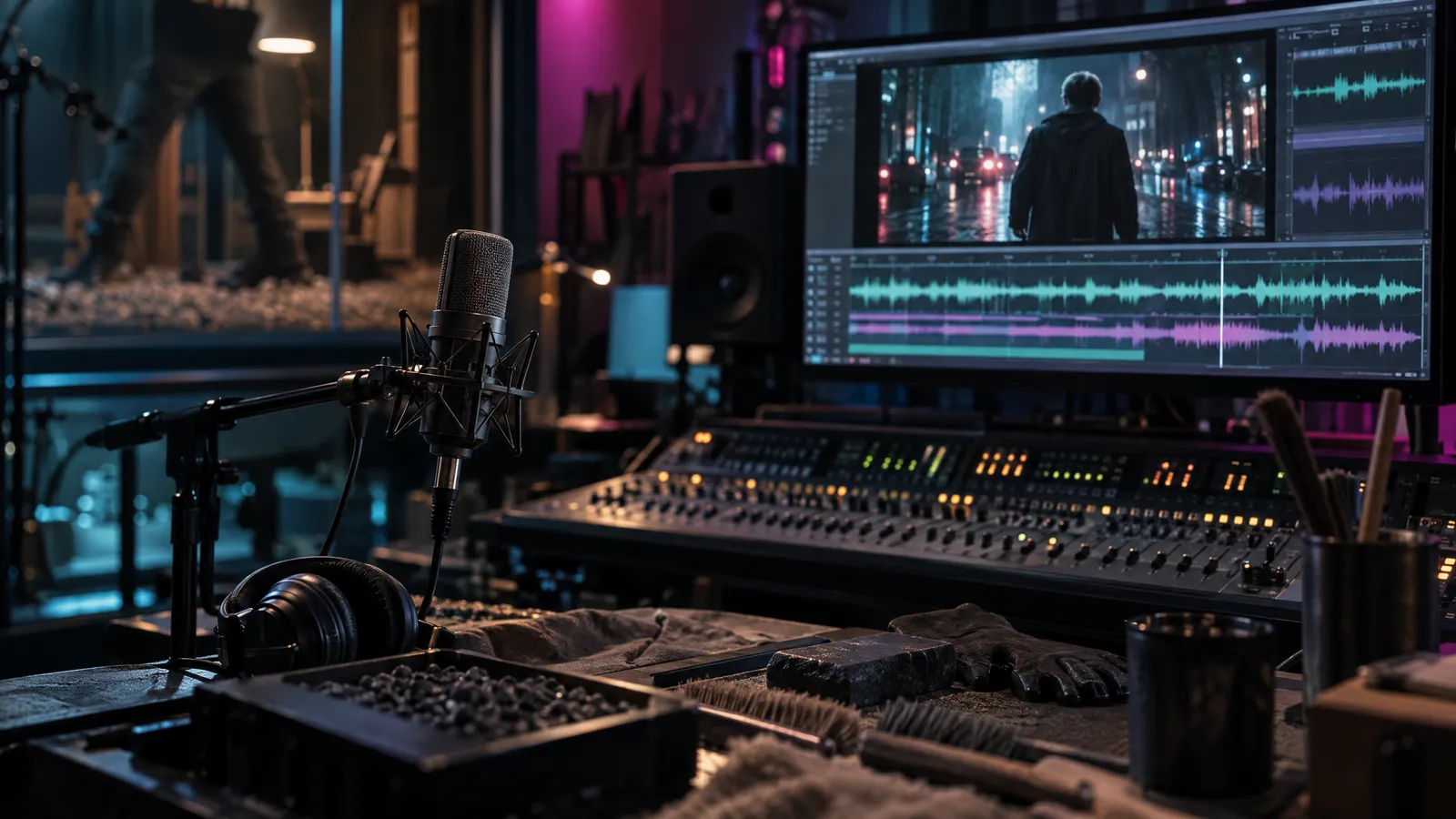
One Magi-2 request accepts up to 20 reference items: 10 images, 5 videos and 5 audio clips. Use images to lock a face, an outfit or a product, a video to borrow motion or camera work, and audio to set a voice or a beat.
Because the upscaler re-injects references, identity holds better in wide shots, where faces are small.
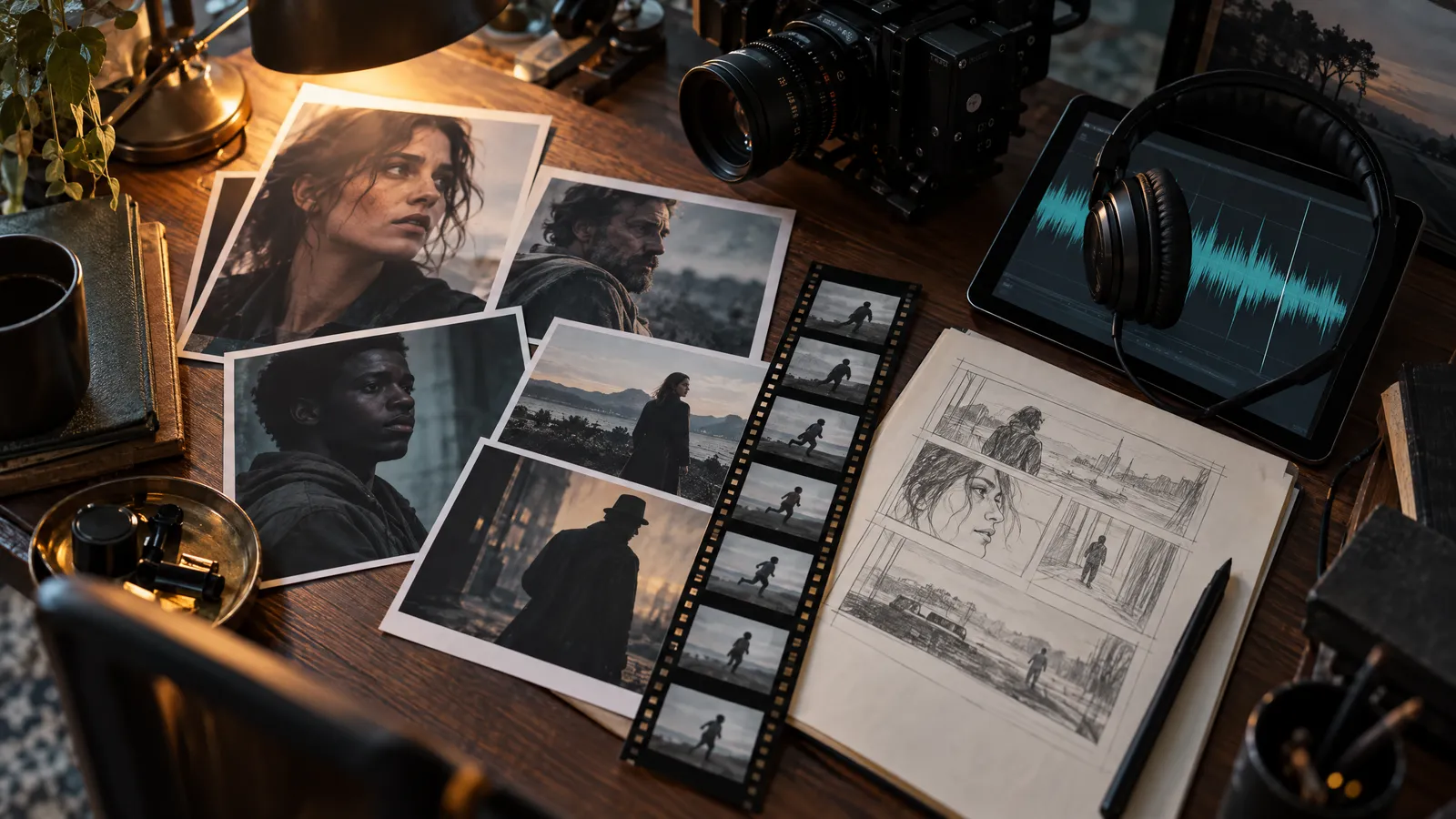
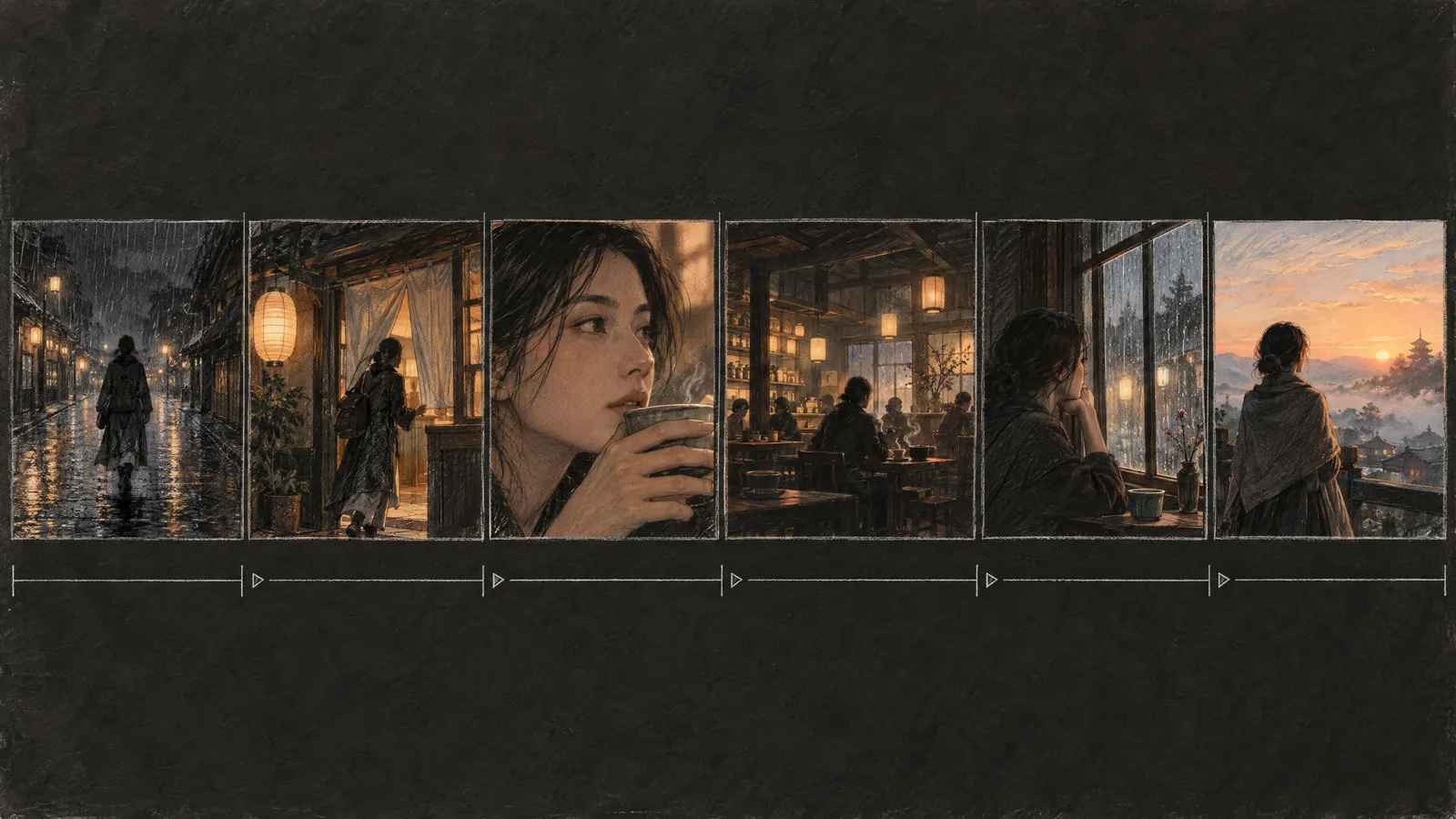
A single Magi-2 clip can run 30 seconds, long enough for several shots. Describe cuts and camera moves in order, and the model follows the timeline. For the cleanest result, give each shot one or two actions and one camera move.
First and last frame mode adds another handle: supply a start image and an optional end image, and Magi-2 animates the path between them.
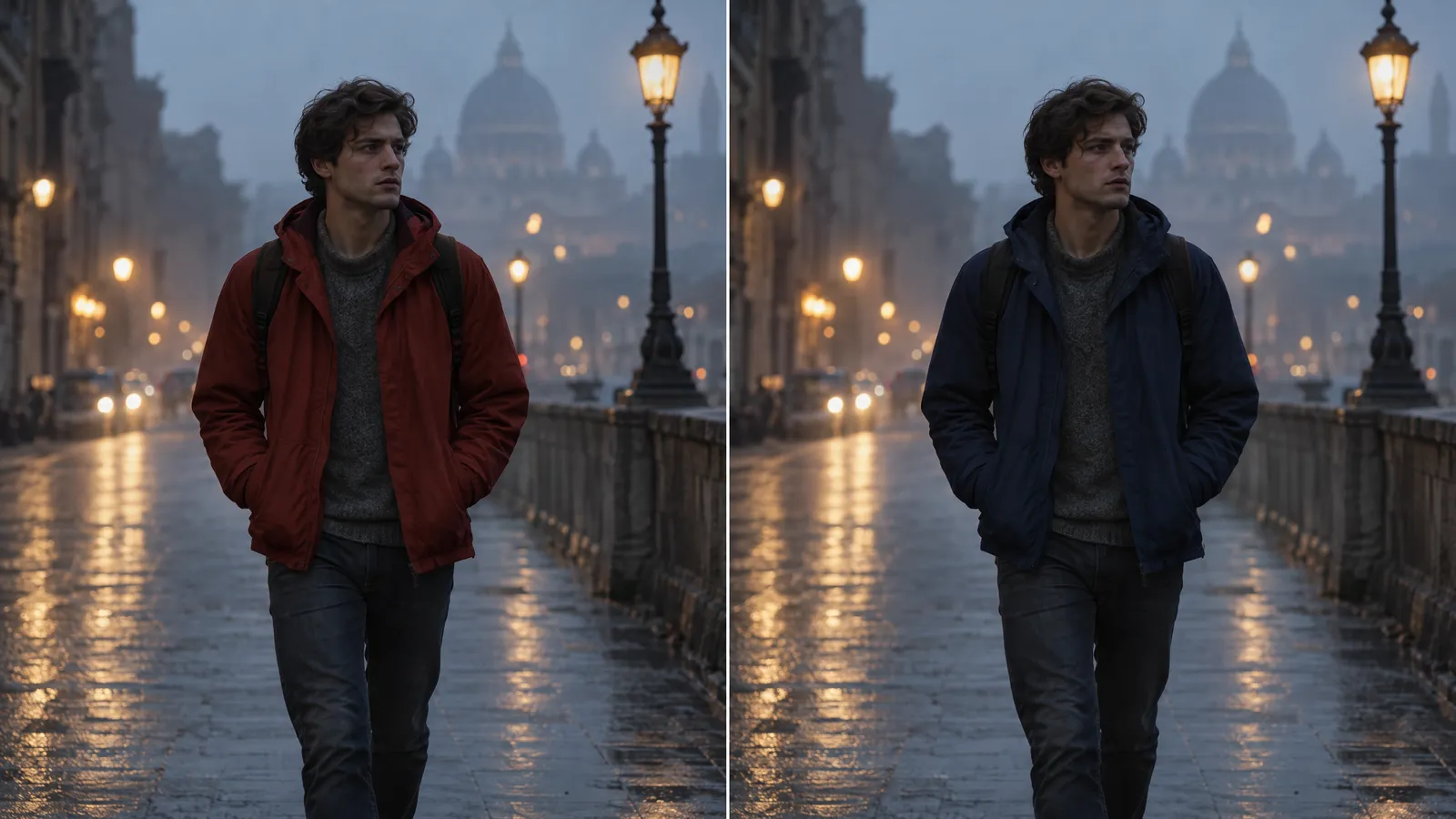
Magi-2 can edit existing footage from an instruction. A prompt such as "change the jacket from red to navy and keep the camera movement" changes the jacket and leaves the street, the motion and the lighting alone.
Add the original clip as a video reference, say what should change and what must stay, and Magi-2 returns a new version.
Magi-2 exposes three generation modes. MagiVideo AI offers all three in the generator above.
Describe a scene in up to 15,000 characters. Choose 4 to 30 seconds, an aspect ratio and whether sound is on.
Provide a first-frame image and, if you like, a last-frame image. Magi-2 fills in the motion between them. The prompt is optional.
Combine up to 10 images, 5 videos and 5 audio clips. Videos can be MP4 or MOV up to 200 MB, audio WAV or MP3 up to 15 MB, each 2 to 30 seconds long.
Magi-2 lets you pick any length from 4 to 30 seconds and one of six aspect ratios. The right setting depends on how many shots you need and where the clip will run.
| Length | Good for |
|---|---|
| 4 to 5 seconds | One action, a product loop or a reaction shot |
| 8 to 10 seconds | One complete beat, such as a short line of dialogue |
| 15 seconds | Two or three shots joined by a cut |
| 20 seconds | A short scene with dialogue and a reaction |
| 30 seconds | A full sequence: a multi-shot ad, a music moment or a mini story |
| Aspect ratio | Good for |
|---|---|
| 21:9 | Cinematic widescreen and trailers |
| 16:9 | YouTube, websites and presentations |
| 4:3 | A classic television look |
| 1:1 | Square feed posts and ads |
| 3:4 | Portrait posts and product cards |
| 9:16 | Reels, Shorts and other vertical video |
Image and video models work well together. Draft a still, check the composition and the faces, then hand the result to Magi-2 to bring it to life.
Open the Image tab and make a character, product or location with GPT Image 2.5, Nano Banana Pro or Seedream 5.5.
Faces, logos and wardrobe should look right before you animate. Fixes are cheap at image prices.
Use the Animate button under the image, or paste its link as a first frame or a reference.
Describe one action, one camera move and the sound. Add a last-frame image to control where the shot ends.
Change the prompt, try another ratio or length and keep the best take.
Generated image links are temporary, so download the files you want to keep.
The figures in this section come from Sand.ai and Higgsfield, not from tests run by MagiVideo AI. Treat them as vendor-reported results.
On the Artificial Analysis Video Arena v2.1 four-task average, Sand.ai reports an Elo of 998.5 for the Preview model and 1150.3 for the flagship, a gain of 151.8 points.
Axis starts at 900. Gain: +151.8.
The line marks 50%.
In a Higgsfield blind vote on November 24, 2026, Seedance 2.5 scored 1219 and Magi-2 scored 1146, second overall, with a 60.5% overall win rate. Magi-2 trails Seedance 2.5 in that vote and beats the other models listed. Rankings move quickly in the first weeks after a launch, so check the sources before you quote them.
Elo scores and win rates summarize blind comparisons between model outputs. They show how often viewers preferred one result over another on a given prompt set, not an absolute quality score. A vendor-run vote can differ from an independent test, so use these numbers as a starting point and compare your own prompts.
Magi-2 is billed per second you request, at one price for 1080p with sound included. Sound on or off costs the same, and the credit price is shown before you press Create. If a generation fails, the credits come back.
The table shows the credits for common lengths and how many clips each plan covers every month. Higgsfield's own web app prices Magi-2 differently, so compare the total for the clip you need.
| Magi-2 clip length | Credits | Clips per month on Starter | Clips per month on Creator |
|---|---|---|---|
| 4 seconds | 960 | 28 | 56 |
| 5 seconds | 1,200 | 22 | 45 |
| 10 seconds | 2,400 | 11 | 22 |
| 15 seconds | 3,600 | 7 | 15 |
| 20 seconds | 4,800 | 5 | 11 |
| 30 seconds | 7,200 | 3 | 7 |
The Preview model was a research release. The flagship Magi-2 is a larger, longer-running and more polished system.
| Magi-2 Preview | Magi-2 | |
|---|---|---|
| Released | August 2026 | November 24, 2026 |
| Total parameters | About 114B | 480B |
| Active parameters | About 6B | About 28B |
| Pre-training data | Baseline | About 4T tokens, roughly 3x |
| Clip length | 10 seconds | 4 to 30 seconds |
| Video Arena Elo (4-task) | 998.5 | 1150.3 |
| Access | Research weights on Hugging Face | Higgsfield web app and API |
Magi-2 follows detailed direction, but it rewards clarity more than length. Start with the subject and what happens, then add the camera, the light and the sound. Keep a shot to one or two actions and a single camera move, and put dialogue in quotation marks.
Example prompt
Slow dolly-in on a ceramics studio at golden hour. A potter shapes a bowl on the wheel and says quietly, "Patience is the whole trick." Wet clay sounds, a radio humming folk music, dust drifting in the light.
Macro orbit around a matte black wristwatch on wet slate, droplets sliding off the crystal, soft rim light, a deep bass hum and a single tick, shallow depth of field.
Medium close-up of two chefs at the pass in a busy kitchen. One says, "Table nine is waiting." The other answers, "Two minutes." Pans clatter, orders are called, handheld camera.
Shot one: wide view of a mountain village at dawn, church bells ringing. Cut to shot two: a baker lifts bread from a stone oven, steam rising. Cut to shot three: children run down a cobbled street laughing.
Slow aerial pullback over a turquoise glacier lake, mist drifting between pine ridges, distant thunder and a soft wind, golden hour light.
Thirty seconds of 1080p video with sound covers a lot of real work. These are the formats where Magi-2 fits best.
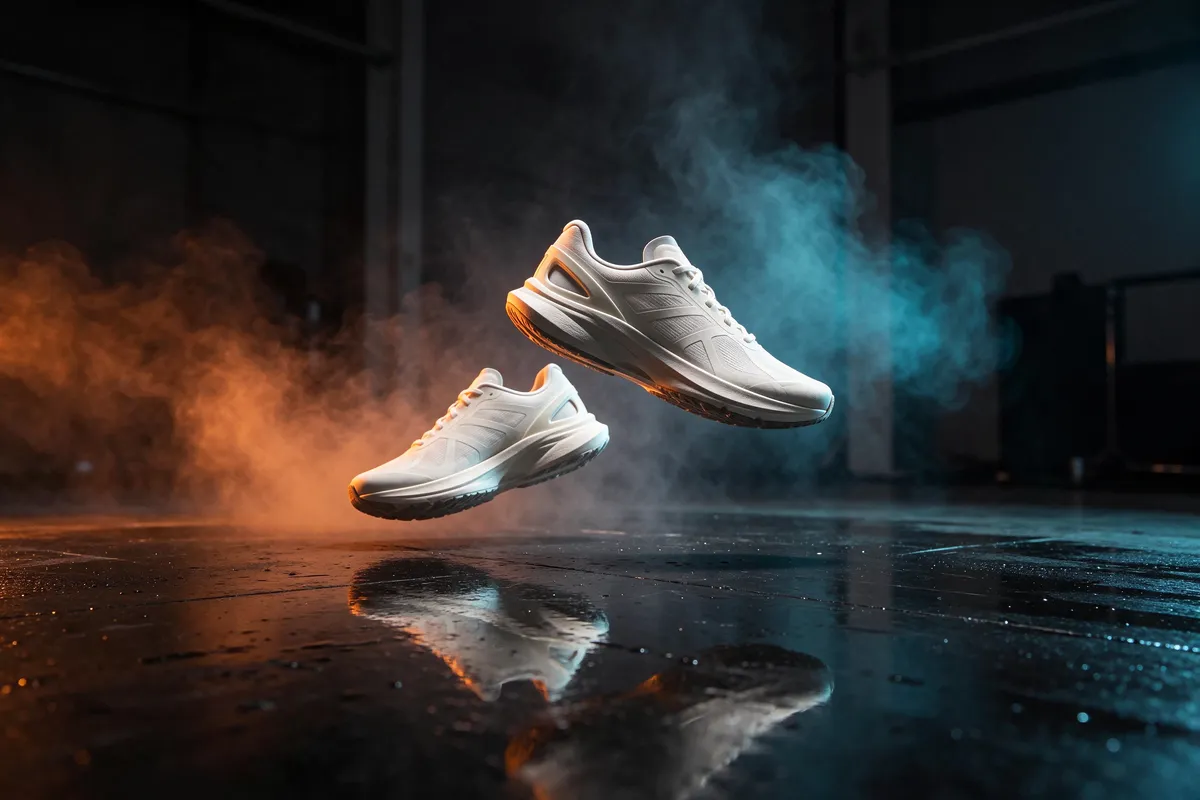
Lock the product with image references, then ask Magi-2 for a hero shot with a camera move and a sound design. Square, vertical and wide ratios cover every placement.
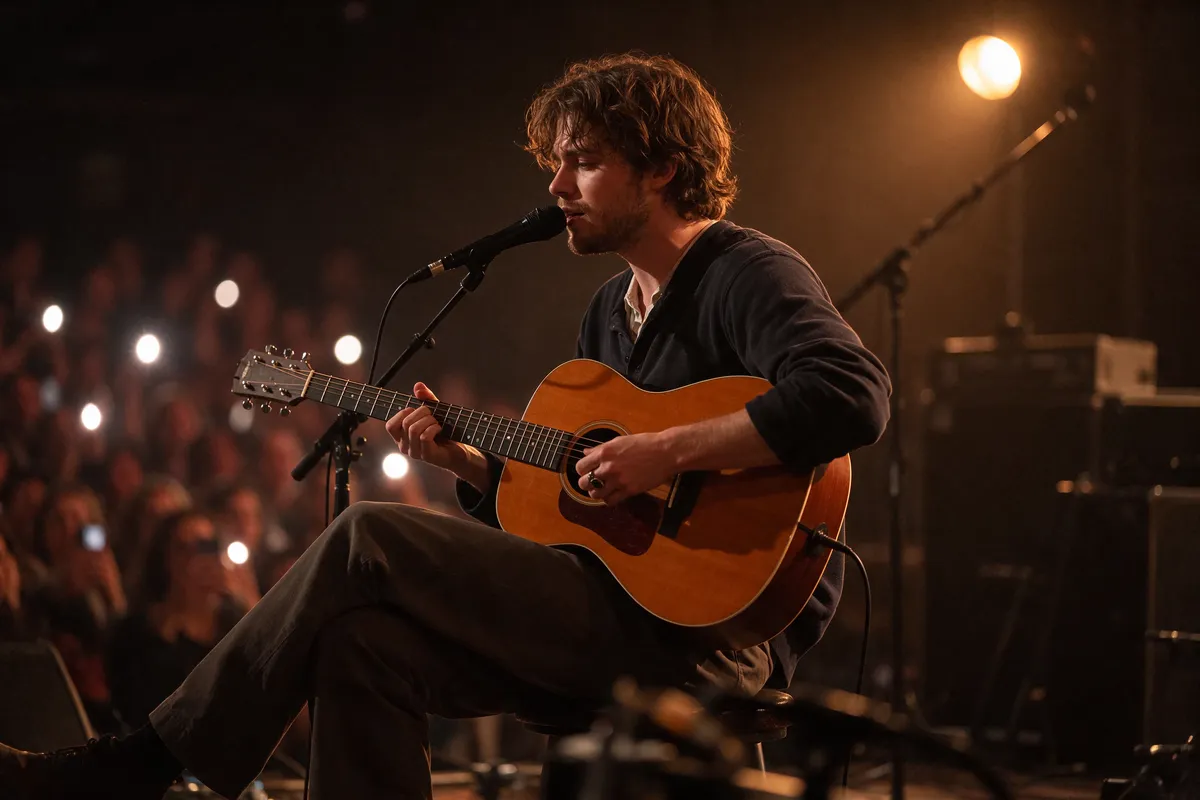
Magi-2 generates music and ambience with the picture, and a 30-second clip leaves room for a verse, a cut and a chorus.
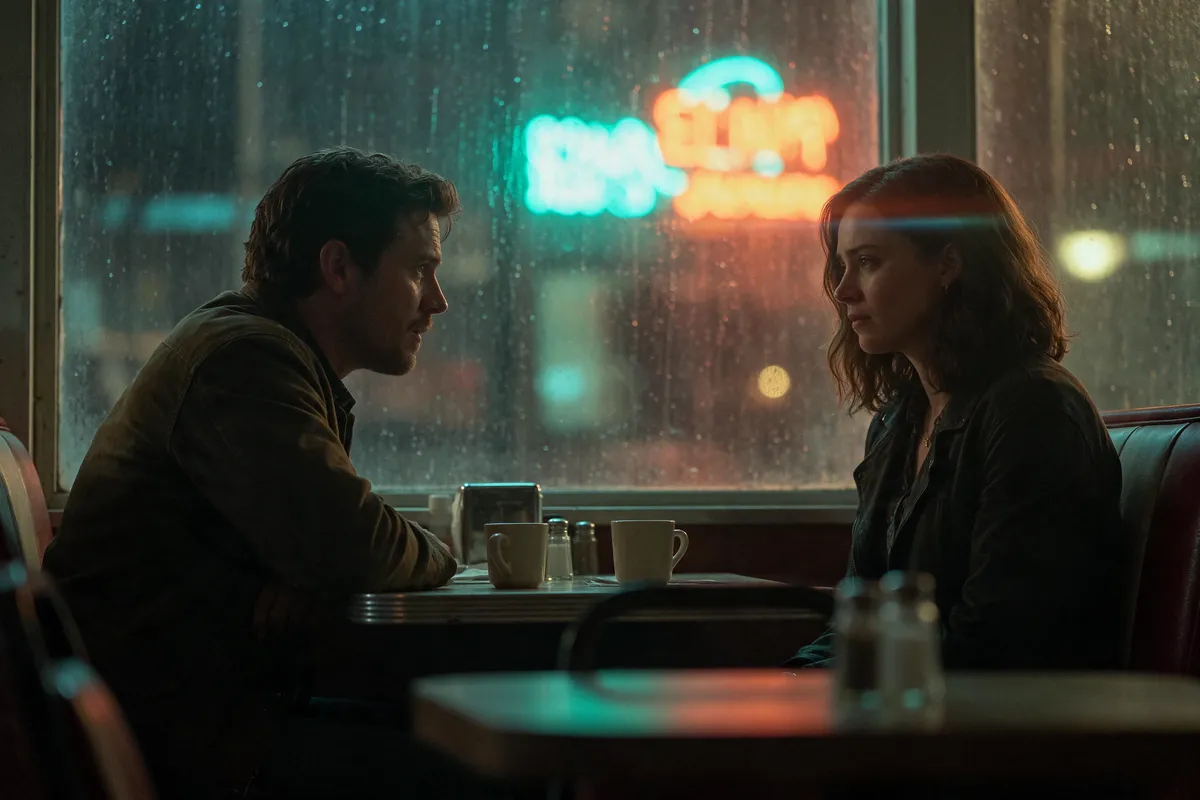
Dialogue with lip sync, several shots and a consistent cast make Magi-2 useful for scenes, trailers and pitch reels.
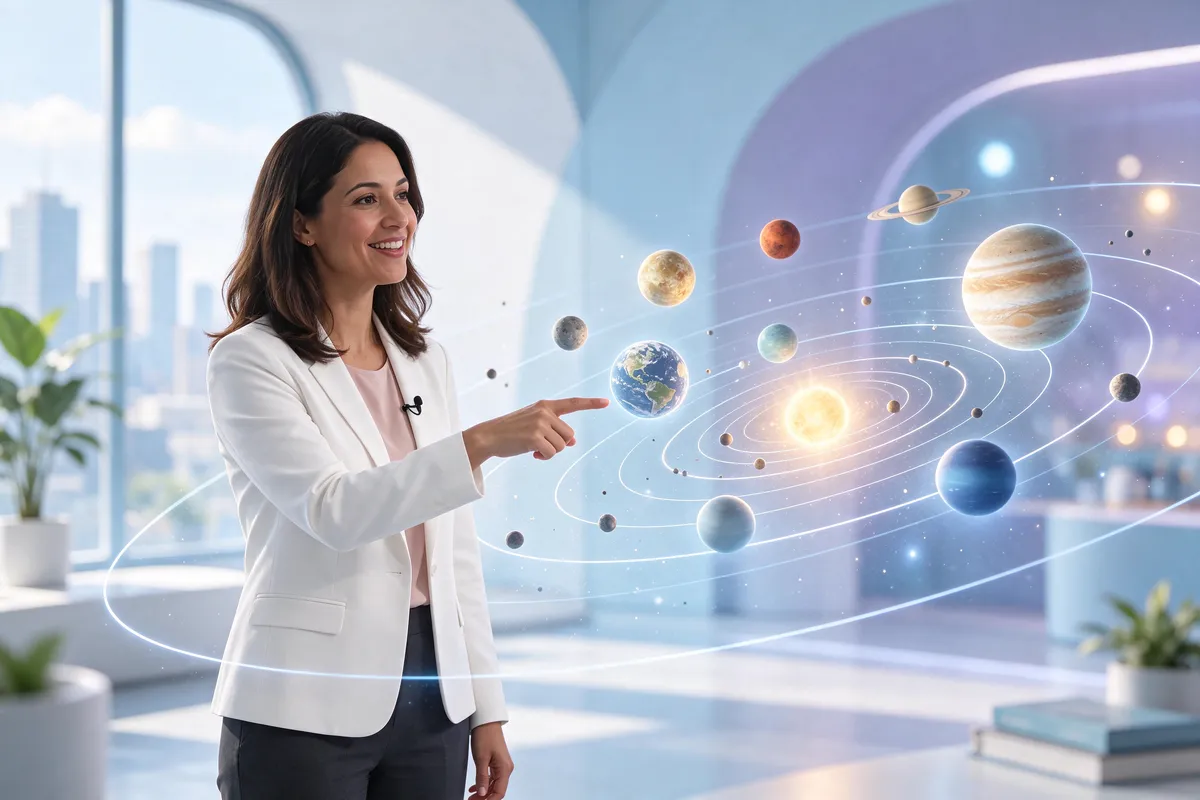
Pair a presenter reference with a spoken script, and Magi-2 builds the visuals around the voice for lessons and product walk-throughs.
No model is perfect, and Sand.ai is open about where Magi-2 falls short. Knowing the limits helps you write prompts that work.
Sand.ai has announced open weights and a technical report for Magi-2, but they are not released yet. Only the Preview weights are on Hugging Face today. Higgsfield's announcement mentions 400B parameters, while Sand.ai's developer post says 480B. This page uses Sand.ai's figure.
Every video model below runs from the same generator, so you can test one prompt on several of them. Credits are for a typical clip: 5 seconds at 720p, with Magi-2 at its only setting of 1080p and Veo 3.1 Fast at its fixed 8 seconds.
| Model | Clip length | Top quality | Sound | Credits, typical clip |
|---|---|---|---|---|
| Magi-2 | 4 to 30 s | 1080p | Optional | 1,200 |
| Seedance 2.5 | 4 to 15 s | 1080p | Optional | 3,240 |
| Seedance 2.0 | 4 to 15 s | 1080p | Optional | 2,130 |
| Kling v4 | 3 to 30 s | 1080p | Always | 2,100 |
| Veo 3.1 Fast | 8 s | 4K | Always | 1,800 |
| Wan 3.0 | 2 to 30 s | 1080p | Optional | 987 |
| MiniMax H3 | 4 to 15 s | 2K | Always | 857 |
A short glossary for the terms used on this page.
Magi-2 leads the lineup. Switch to any other model from the same prompt box, and every price is shown in credits before you generate.
Sand.ai
480B model. 4 to 30 seconds of 1080p video with synced sound.
1,200 credits for 5 s at 1080p
ByteDance
Cinematic shots, strong prompt following, native audio.
3,240 credits for 5 s at 720p
ByteDance
Lower-cost Seedance with reliable motion.
2,130 credits for 5 s at 720p
Kuaishou
Realistic motion, up to 30 seconds, always with audio.
2,100 credits for 5 s at 720p
Photoreal 8-second clips with built-in sound.
1,800 credits for 8 s at 720p
Alibaba
Best price for longer clips, 2 to 30 seconds.
987 credits for 5 s at 720p
MiniMax
Sharp 2K clips from 4 to 15 seconds.
857 credits for 5 s at 768p
OpenAI
Precise text rendering and edits.
26 credits per 1K image
Detailed, reference-friendly images.
60 credits per 1K image
Fast and inexpensive drafts.
36 credits per 1K image
ByteDance
Photoreal portraits and product shots.
48 credits per 1K image
Black Forest Labs
Rich detail up to 4K.
116 credits per 1K image
Alibaba
Posters and layouts with clean typography.
62 credits per 1K image
One pool of credits covers Magi-2, every other video model and every image model. Annual billing is selected by default and saves 40%.
Individual creator
$11.94/ month$19.90
Billed $143.28 per year
27,000 credits / month
Individual creator
$23.94/ month$39.90
Billed $287.28 per year
54,500 credits / month
Individual creator
$47.94/ month$79.90
Billed $575.28 per year
109,500 credits / month
Small team
$89.94/ month$149.90
Billed $1,079.28 per year
206,000 credits / month
Growing team
$179.94/ month$299.90
Billed $2,159.28 per year
414,000 credits / month
Studio
$299.94/ month$499.90
Billed $3,599.28 per year
692,000 credits / month
Credits refresh monthly, including on annual plans. Unused subscription credits do not roll over. Prices in USD. Subscriptions renew until cancelled. Secure checkout by Stripe.
It is Sand.ai's flagship AI video model, with 480B parameters and about 28B active per token. It turns text, images, video and audio references into 4 to 30 seconds of 1080p video with synchronized sound.
Sand.ai released it on November 24, 2026. The lab previously published Magi-1 in April 2025 and a Preview model in August 2026.
Clips run from 4 to 30 seconds at 1080p and 25 fps. Six aspect ratios are supported: 21:9, 16:9, 4:3, 1:1, 3:4 and 9:16.
Yes. Lip-synced dialogue, foley, ambience and music are generated together with the video. You can turn sound off with the Sound switch, and the credit price stays the same.
Up to 20 items: 10 images, 5 videos and 5 audio clips. Media must be reachable through public HTTPS links. Images stay under 30 MB, videos are MP4 or MOV up to 200 MB, and audio is WAV or MP3 up to 15 MB.
A 5 second clip costs 1,200 credits, and a 30 second clip costs 7,200 credits. Credits come with a monthly or annual plan. The exact price appears before you generate.
In Higgsfield's blind vote, Seedance 2.5 ranked first and Magi-2 second. Sand.ai reports that it wins 71% of comparisons against Seedance 2.0, 79% against Wan 3.0 and 83% against Kling 4.0. These are vendor figures, so test your own prompts.
Yes. Add the clip as a video reference and describe the change, for example "change the jacket from red to navy and keep the camera movement". Only that detail changes and the rest of the shot stays.
Not yet. Sand.ai has announced open weights and a technical report, but neither is out. The earlier Preview weights are available on Hugging Face.
Sand.ai lists artifacts in extremely fast motion, overly smooth 2D animation in medium and wide shots, and difficulty with very complex soundscapes. It also runs one generation at a time per account and outputs 1080p only.
Give each shot one or two actions and a single camera move, quote dialogue, name two or three sounds and add reference images when identity matters.
A mixture-of-experts model contains many specialist sub-networks and routes each token to only a few of them. That is how Magi-2 runs as a 480B model with about 28B active parameters.
They come from blind comparisons between outputs and show relative preference on a set of prompts, not absolute quality. Vendor-run results can differ from independent tests, so try your own prompts side by side.
Credits are returned when a generation fails. Requests that fail moderation are not charged.
Video: Seedance 2.5, Seedance 2.0, Kling v4, Veo 3.1 Fast, Wan 3.0 and MiniMax H3. Images: GPT Image 2.5, Nano Banana Pro, Nano Banana 2, Seedream 5.5, FLUX.3 and Qwen Image 3.0.
Yes. Sign in with Google or with a one-time code sent to your email, choose a monthly or annual plan and pay through Stripe's secure checkout. Credits arrive as soon as the payment clears, and one-time credit packs unlock after your first subscription.
No. MagiVideo AI is an independent platform that calls Magi-2 through the Higgsfield API. All model names belong to their owners.
Primary sources for everything on this page.
The flagship post with architecture, training, benchmarks and limits.
Read source →The technical write-up of the 114B research model.
Read source →Features, FAQ and where the API is hosted.
Read source →Research weights for the earlier release.
Read source →Write a scene, choose a length and let the model handle the picture and the sound.
Open the generator